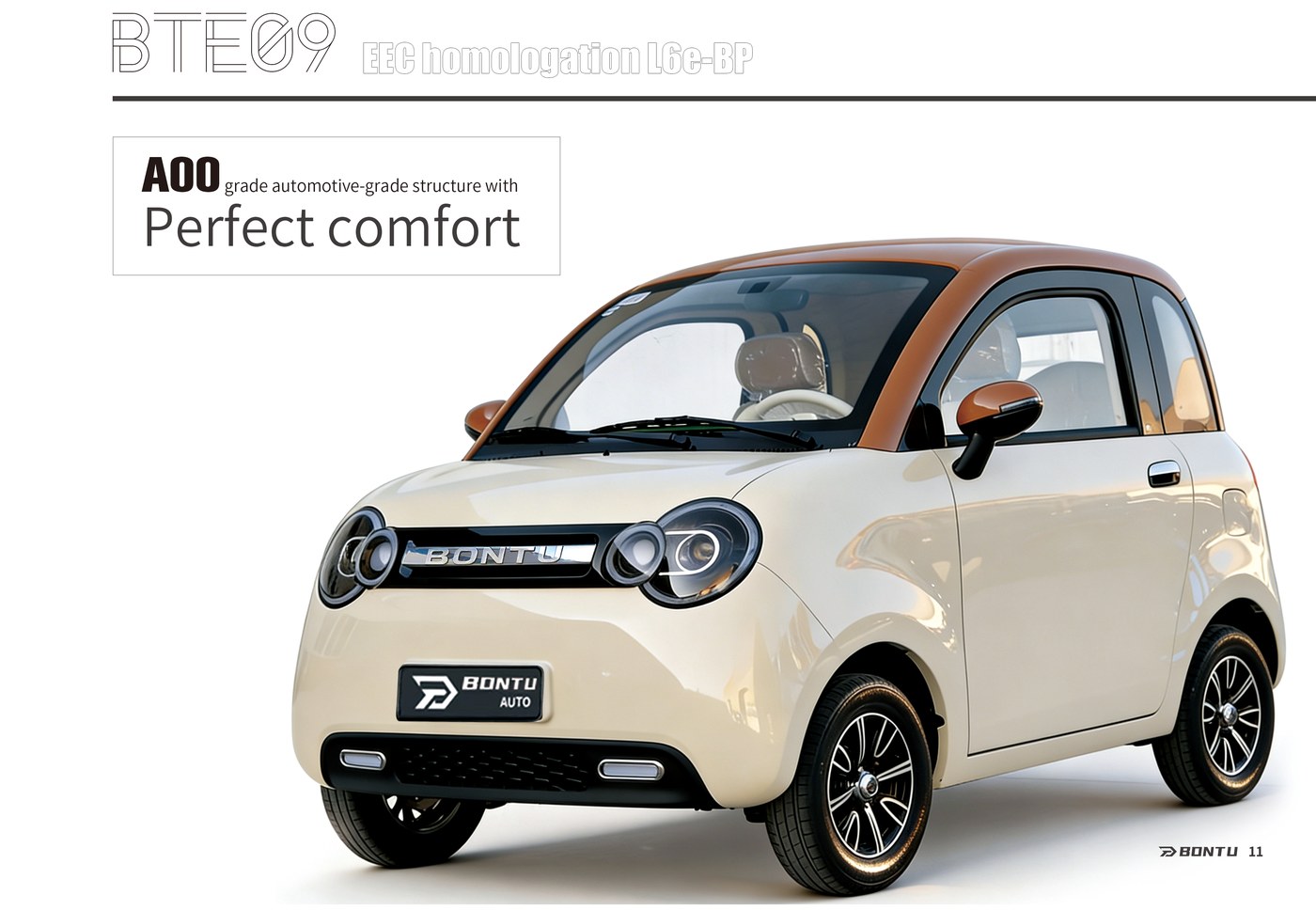

European buyers often ask us: “Which approval do I actually need for my market?” The answer starts with understanding the vehicle categories defined by Regulation (EU) No 168/2013. In this guide we explain the difference between the L6e and L7e categories — and what each means for registration, taxation and where your customers are allowed to drive.
What Regulation (EU) 168/2013 Does
EU Regulation 168/2013 governs the approval and market surveillance of two- or three-wheel vehicles and quadricycles. Any L-category vehicle sold and registered in the EU must hold a valid Whole Vehicle Type Approval (WVTA) or an approval issued under the regulation’s framework, together with a Certificate of Conformity (CoC) for each individual vehicle.
L6e — Light Quadricycles
Light quadricycles (sub-categories include L6e-BP, “light on-road passenger”) are limited in power and speed by design. In practical terms:
- Continuous rated power is limited (typically capped around 6 kW)
- Design speed is capped at 45 km/h
- Driving licence requirements are lighter than for cars — which is exactly why L6e vehicles are popular for youth mobility, rentals and shared fleets
Our A8P holds WVTA in category L6e-BP — a two-seat city quadricycle designed around these limits.
L7e — Heavy Quadricycles
Heavy quadricycles (such as L7e-CP, “heavy on-road passenger”) allow higher mass and stronger performance than L6e:
- Higher power ceiling (typically up to 15 kW) and greater payload capacity
- Suitable for utility work, last-mile delivery and passenger transport beyond light-quadricycle limits
- Registration and licence rules are closer to small passenger vehicles
Our A901 holds ECE type approval e5*168/2013*00222*00 in category L7e-CP.
Why the Category Matters for Your Business
The category determines three commercial things: who can drive the vehicle, where it can be driven, and what documents your customer needs at registration. Choosing the right category for your market is a sales decision, not just a technical one — an L6e model may unlock a younger customer base, while an L7e model opens utility and delivery fleets.
One Warning: Configuration Changes
If a powertrain or configuration change is requested after approval, the approval may need to be extended. For example, changing the motor or battery specification of an approved model can invalidate the existing certificate. Always check with the approval holder before modifying a certified vehicle — this is a conversation we have with partners before every custom order.
Talk to Us
QIYAO EV supplies both L6e-BP and L7e-CP certified models with per-unit CoC documents. If you are unsure which category fits your market, send us your country and use case — we will map it to the right vehicle and approval.
Have questions about EU categories in your market? Leave a comment below — we answer every question.